



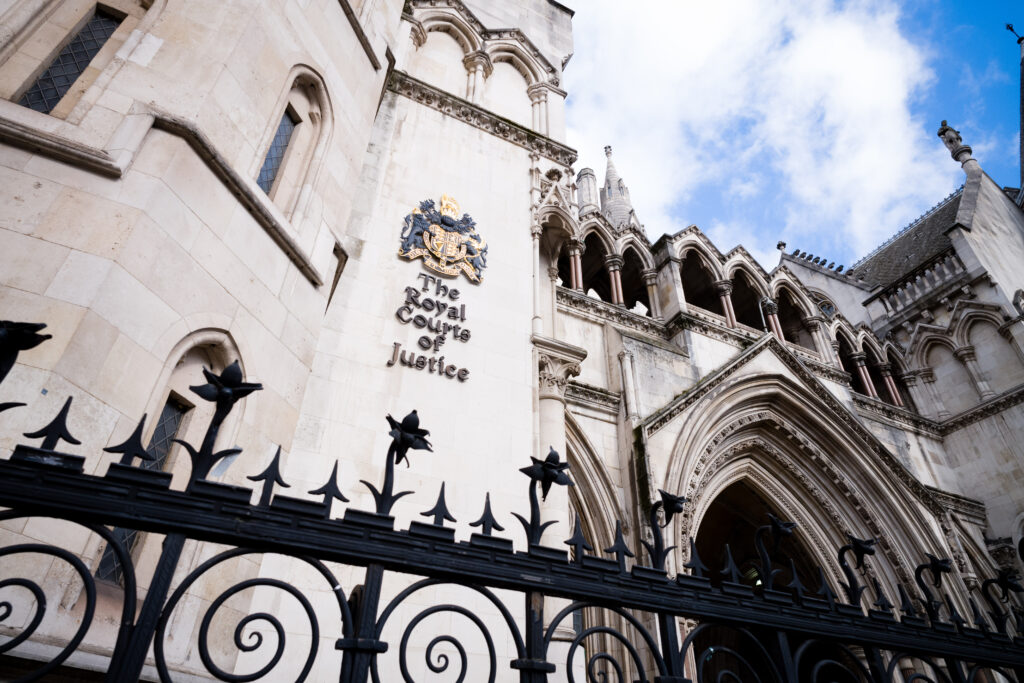
Webster v (1) ESMS Global Ltd, (2) Sood [2025] EWHC 3107 (Ch)
5th January 2026
The High Court has clarified that a member may obtain a mandatory injunction to compel a company to circulate a written resolution where the company has failed to do so following a valid request by a member pursuant to section 292 of the Companies Act 2006. Previously, commentary on sections 292 and 293 of the Companies Act 2006 had suggested that this route was not one open to a disgruntled member.
Edward Davies KC and Anna Scharnetzky appeared for the successful claimants, Mr and Mrs Webster, instructed by Kingsley Napley.
Case Summary
Mr and Mrs Webster are the directors of the First Defendant, ESMS Global Ltd. (the Company) and together own or control 47.6% of the shares in the Company. The Second and Third Defendants, Mr and Mrs Sood, are the other directors of the Company and also own or control 47.6% of the shares in the Company. The remaining 4.8% of the shares in the Company are held by Trident, the trustee of the Company’s employee benefit trust.
The relationship between the Websters and the Soods had completely broken down, such that the board was routinely deadlocked. In those circumstances, the Websters sought to appoint an additional, independent director to break the deadlock. The Websters, as members of the Company, made a request under section 292 of the Companies Act requiring the Company to circulate their proposed written resolutions for the appointment of an additional director.
It was important that the Websters’ proposed written resolutions should be circulated as written resolutions rather than being moved at a general meeting of the Company. This was because the trustee of the Company’s EBT could under the trust deed vote on a written resolution – and thus break the deadlock between the Websters and the Soods – but could not vote at a general meeting (see Trident v ESMS Global Limited (28 December 2023), a decision of the Royal Court of Guernsey).
The Soods opposed the appointment of an additional director and used their powers as directors of the Company to block the circulation of the Websters’ proposed written resolutions. The Websters then commenced a claim against the Company and the Soods seeking a declaration and an injunction compelling the Company to circulate the written resolutions.
The Websters’ claim was tried before HHJ Cadwallader (sitting as a High Court judge). On 25 November 2025, HHJ Cadwallader handed down judgment allowing the Websters’ claim in full. The Judge held (among other matters) that sections 292 and 293 of the Companies Ac 2006 create private rights for members in the nature of a property right forming part of the bundle of rights which come with being a shareholder. HHJ Cadwallader concluded that on a true construction of the statute, the members of a company had a private remedy notwithstanding the imposition of a criminal penalty in section 293(5) (committed by any officer ‘in default’ in the event of a company’s failure to comply with section 293). Accordingly, the judge granted the declaration and injunction sought by the Websters, including an ancillary order permitting Mr Webster to circulate the written resolution on the Company’s behalf in the event that the Company failed to comply with the court’s mandatory injunction.
At the consequentials hearing on 11 December 2025, HHJ Cadwallader refused to grant permission to appeal and ordered the Soods to pay the Websters’ and the Company’s costs (with an order for those costs to be paid on the indemnity basis up until the date – shortly before trial – on which the Soods had conceded that the proposed written resolutions were ones with could ‘properly be moved’ for the purposes of section 292).
Comment
The decision in Webster v ESMS Global Ltd provides welcome clarification that members may obtain injunctive relief to compel a company to circulate a written resolution to its eligible members. Previously, commentary on ss 292 and 293 suggested that this route was not one open to a disgruntled member.
In light of the requirements under ss 292 and 293, and the criminal offence under s 293(5), there should not be many instances where a company’s board of directors refuses to circulate a written resolution which may ‘properly be moved’, such that the company is under an undeniable obligation to circulate it. However, following the decision in Webster v ESMS Global Ltd, it is clear that where this occurs, the court is prepared to enforce members’ rights under ss 292 and 293 by means of an injunction and, if necessary, ancillary relief empowering a single director or member to circulate the resolution on the company’s behalf.
Accordingly, whilst previously members whose request under s 292 was ignored were advised to go down the route of requisitioning a general meeting under s 303 and, if the board of directors then failed to call a general meeting, to themselves convene a general meeting under s 305, it is now clear that there is another option; obtaining an injunction. There are a number of scenarios where this may prove to be the more attractive option.
One such scenario is where a member urgently seeks to have a resolution passed. In those circumstances, an urgent application for an interim mandatory injunction to compel the circulation of the resolution, coupled with an application for summary judgment, should achieve the member’s objective more quickly. If the proposed resolutions are resolutions which plainly may ‘properly be moved’, it is difficult to see what defence the company would have to a claim for a mandatory injunction.
Another such scenario is where it is impractical to convene a general meeting. One reason might be an expectation that any meeting convened, whether by the board under s 304 or by the member under s 305, would not be quorate.
However, it is important to bear in mind that the position remains that there is no ‘self-help’ remedy for members if their request under s 292 is not complied with by the company. If the board of directors fails to approve the circulation of the proposed written resolution to eligible members, this does not entitle a member to circulate it. Any attempt to nevertheless do so will be ineffective and, even if the requisite percentage of members purport to signify their consent to the proposed written resolution, it will not be validly passed (see Kamenetskiy v Zolotarev [2023] EWHC 2619 (Ch) and Re Sprout Land Holdings Ltd (in administration) [2019] EWHC 806 (Ch)).
Please click here to read the Judgment.